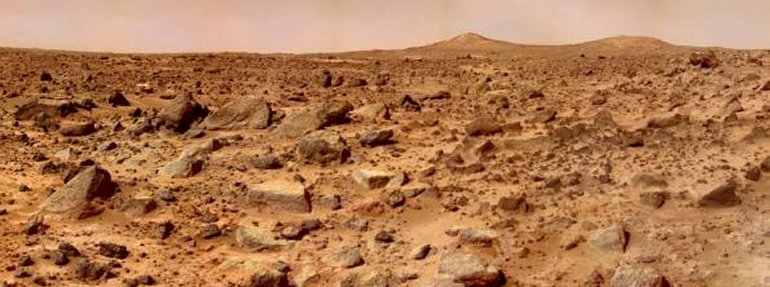
 As a quick update to the buzz regarding Phoenix lander data that was being kept "hush-hush": apparently, there had been no Presidential briefing made by NASA, AND the fact that perchlorates would indicate that life could NEVER have developed on Mars is not exactly true, either. At this point, it's too early to say what the presence of perchlorates would mean to the potential for finding life on the Red Planet. NASA, for the first time, actually had to go public with its news before scientists had completed their analysis of the Phoenix lander data because of all the buzz being generated, some false, especially online.
Showing posts with label Astrobiology Magazine. Show all posts
Showing posts with label Astrobiology Magazine. Show all posts
Thursday, August 7, 2008
Mars Buzz
As a quick update to the buzz regarding Phoenix lander data that was being kept "hush-hush": apparently, there had been no Presidential briefing made by NASA, AND the fact that perchlorates would indicate that life could NEVER have developed on Mars is not exactly true, either. At this point, it's too early to say what the presence of perchlorates would mean to the potential for finding life on the Red Planet. NASA, for the first time, actually had to go public with its news before scientists had completed their analysis of the Phoenix lander data because of all the buzz being generated, some false, especially online.
Read more!

Friday, August 1, 2008
Water on Mars
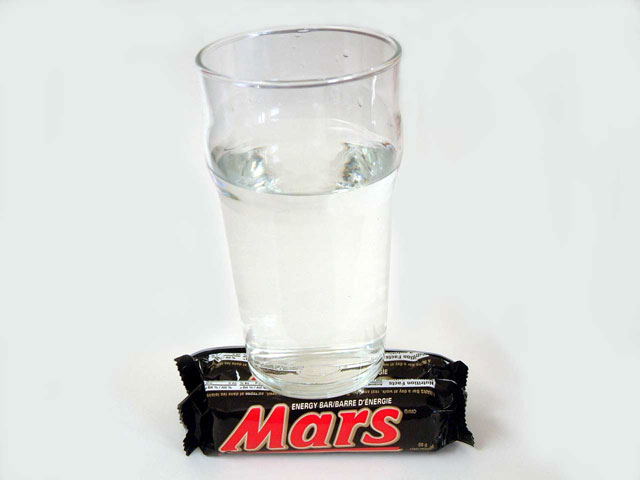 Credit and Copyright Ellen Roper
NASA announced this week that "for the first time, Martian water has been touched and tasted". According to results obtained by heating a soil sample taken by the Phoenix Mars Lander's robotic arm, vapors released by the heating process gave clear indication of the presence of water. A number of different sources are reporting on the story, including Astrobiology Magazine. What does this mean for the field of Astrobiology? Water is the stuff of life, so any planet that can be shown to contain or have contained water is a prime candidate for being able to support life. A prime question to be answered is: given the fact that Mars has water, like Earth, may we expect the life to be found to be like Earth life? While the physics and chemistry and mineralogy on Mars is the same as on Earth, we probably can't expect much resemblance if life is presumed to have evolved based on the lengthy, complex system of environmental changes that occurred on Earth over millions of years. On the other hand, if life is the result of self-organized phenomena, as are chemicals, crystals and minerals, then the people we meet on the Red Planet will look very familiar to us.
Read more!
Wednesday, July 30, 2008

According to Astrobiology Magazine, "Many of the ingredients for life formed in outer space. The Earth formed from star dust, and later meteorites and comets delivered even more materials to our planet. But scientists are still unsure which molecules played the most important roles in life's origin." The Pinwheel Galaxy, pictured above, is being studied to further the theory that organic molecules present in outer space could have been responsible for the origin of life on Earth. Read more here.
Read more!
Subscribe to:
Posts (Atom)
